
Mediation Process Approaches and Communication
Definition of Mediation
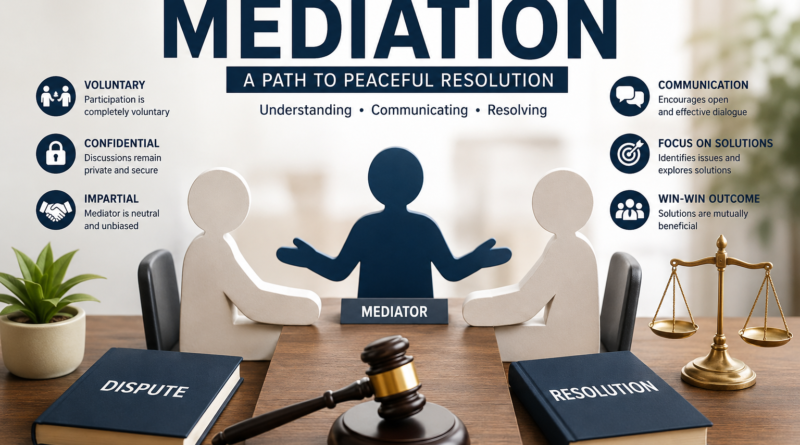
Mediation refers to an informal, non-binding and structured process where two parties with a conflict are helped by a neutral third party referred to as a mediator to communicate and reach an agreement on how to solve their dispute. The role of a mediator is not to make a decision, determine what is right or wrong or to rule on the dispute. Instead, he/she guides the parties through discussion, highlights the issues in question, clarifies any misunderstandings, and helps them find a solution. Ultimately, the decision lies with the disputing parties.
Mediation is often seen as one of the most effective forms of Alternative Dispute Resolution since it emphasizes cooperation over confrontation. Mediation attempts to settle a dispute amicably through understanding and consensus while avoiding unnecessary conflicts. The goal of mediation goes beyond resolving a dispute. Instead, the focus is more on identifying the source of the dispute and solving it amicably.
Mediation Elements
In order for mediation to be successful, there have to be specific elements necessary in the process. These elements help build the foundation for mediation and ensure the fair and peaceful resolution of any disputes.
Disputing Parties
The first and foremost element in the mediation process is the presence of the disputing parties. As mediation is a voluntary process, parties should be willing to participate in the process and cooperate in order to find an acceptable solution. This is very important because in the end the settlement will have to be accepted by the disputing parties.
The disputing parties are encouraged to share their concerns, to voice their interests and to participate actively in discussions. Contrary to the trial process, which involves lawyers and judges, in the mediation process parties are placed in the center of the dispute settlement process.
Neutral Mediator
A mediator is a neutral third party that helps the disputing parties communicate. A mediator does not take sides in the dispute and does not impose a settlement. The mediator creates the constructive atmosphere, encourages discussion and helps to identify the points of agreements and helps disputing parties reach a settlement.
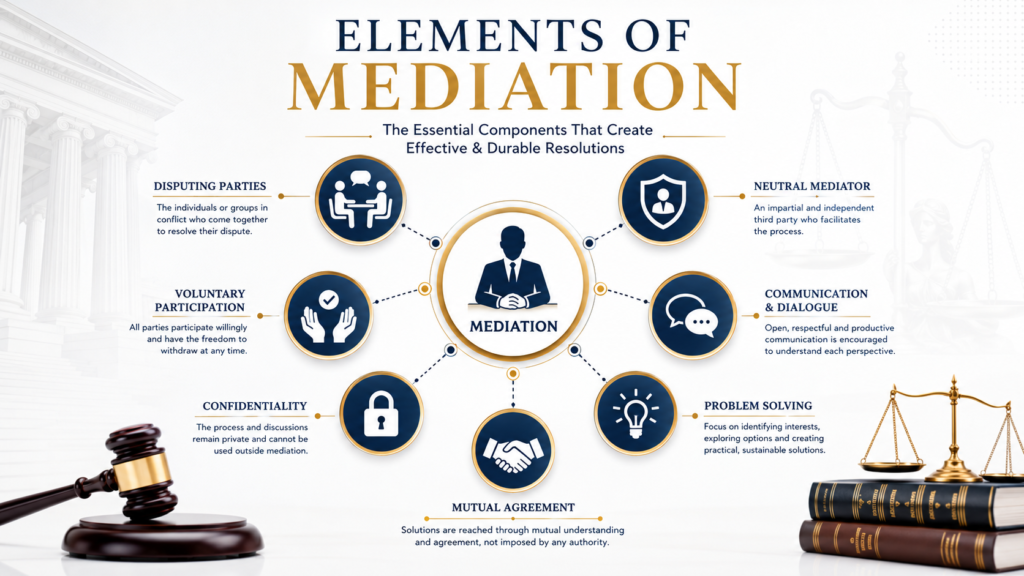
Voluntary participation
Voluntary participation is one of the key characteristics of mediation. The participants enter the process voluntarily and have the liberty to leave at will. An agreement cannot be imposed on the parties involuntarily.
The voluntary character of the process promotes collaboration and makes sure that the agreement reached is truly based on willingness.
Communication and dialogue
Good communication is an important component of mediation. The process requires parties to communicate freely and openly. Communication enables the parties to see things from each other’s perspective and learn about their interests and needs.
The role of the mediator in the process consists of promoting good communication among the parties. Effective communication between the parties is the key to successful mediation.
Confidentiality
Confidentiality is one more key characteristic of mediation. The information provided by the parties during the process is confidential and cannot be used against them in court.
It increases the likelihood that parties will be open and honest since they can freely talk about the issues that need confidentiality. It also promotes trust within the process of mediation.
Mutual Agreement
Mutual agreement is another important benefit of mediation. Contrary to court decisions, the agreements reached through mediation come from the participants themselves. They are the results of consensus not coercion.
As the agreement is the result of mutual effort of the parties, they are more likely to fulfill it.
Problem Solving Orientation
Mediation is a problem solving process which does not involve blaming any of the parties. Contrary to court proceedings which are mostly focused on past faults, mediation looks to future solutions.
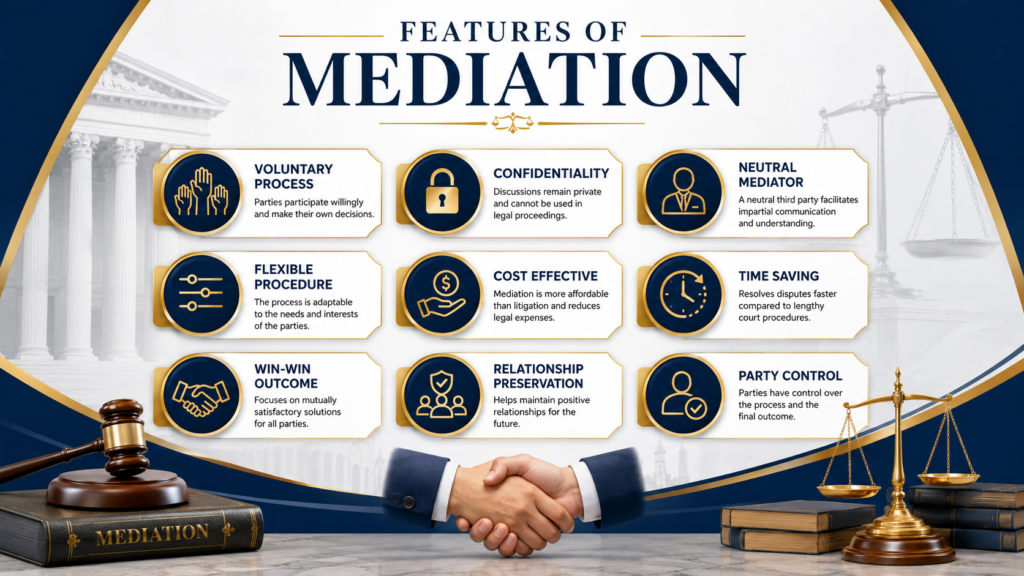
Important Features of Mediation
Voluntary Nature of Mediation
The voluntary nature of mediation is one of its important features. The participation in mediation and the settlement in mediation are done voluntarily and not through compulsion.
In-court procedures are usually compulsory and hence do not have such a feature.
Less Formal Nature of Mediation
The mediation process is less formal compared to the litigation process. It does not have to strictly follow any complicated procedural requirements.
Process Centred on Parties
In the process of mediation, the parties play a central role in discussing, identifying the issues, developing solutions, and deciding whether to make a settlement.
Neutral and Impartial Role of Mediator
The mediator does not take sides in the process of mediation; he only facilitates the process.
This feature plays an important role in building the trust and confidence of the parties.
Confidentiality of Mediation
Mediation is a confidential process. Statements, discussion and offers during mediation are confidential.
Adaptability of the Procedure
The mediation procedure is very flexible and adaptable based on the requirements of the parties and the nature of the dispute.
Issue-Based Settlement
While litigation involves determination of legal rights and obligations of the parties, the mediation process involves the interests, needs, and issues of the parties.
Maintenance of Relationship
One of the most significant features of mediation is that it maintains relationship. Since mediation requires cooperation of the parties, it is able to maintain personal, family, business, and community relations.
Outcome Based on Win-Win Basis
In mediation, the objective is to settle a dispute in such a way that it benefits everyone rather than winning for some and losing for others.
Cost and Time Saving
As compared to litigation, mediation is relatively quick and cost-effective.
Importance of Elements and Characteristics of Mediation
Elements and characteristics of mediation all work together in making mediation an effective dispute resolution tool. These elements combine to create an atmosphere that is founded on trust, cooperation, and mutual respect. Mediation makes it possible for people to solve disputes through peaceful means without necessarily damaging their relationships.
This makes mediation a very good tool for resolving disputes such as those within families, business, workplaces, communities and elsewhere where relations matter.
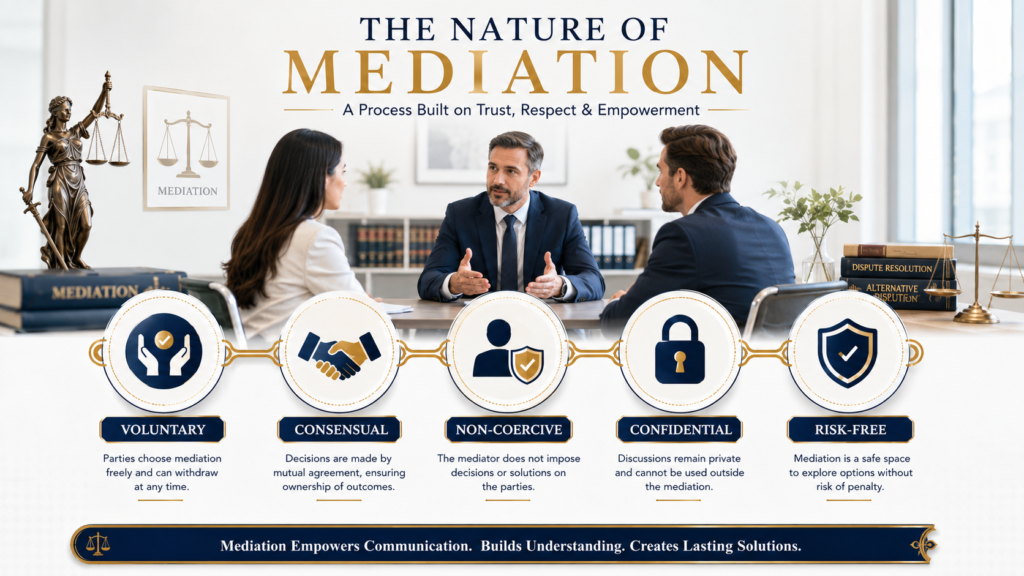
Mediation Nature – Voluntary, Consensual, Non-Coercive, Confidential and Risk Free
Mediation is one of the most efficient ways of Alternative Dispute Resolution (ADR), due to the special nature and flexibility of this form. In contrast to the traditional form of litigation, mediation does not concentrate on the process of imposing decisions and finding winners and losers. This process of mediation promotes cooperation, communication, and understanding of the opposing sides. The successful mediation process largely relies on some specific features that characterize it and separate from other forms of dispute resolution process. They include such features as being voluntary, consensual, noncoercive, confidential and risk free.
Nature of Mediation
The nature of mediation consists of participation, cooperation, and selfdetermination. This method allows resolving disputes peacefully while maintaining the control over the result.
Voluntary Nature of Mediation
Voluntariness is one of the important aspects of mediation. Whether to join mediation or not is based on willingness of the parties. Nobody can force a party to get involved in mediation; they have the option of joining or leaving the process at any point of time.
Voluntariness brings about true participation and cooperation among the parties. Since the parties voluntarily decide to become part of the mediation process, they are open to communicating and making an effort to settle their disputes. Voluntary aspect makes people more confident in the process since the parties have the freedom to decide.
This distinguishes mediation from litigation where the parties cannot avoid the court process and its decision.
Consensual Aspect of Mediation
It should be noted that the process of mediation itself has a very consensual aspect. Any decision that is made during the process of mediation is always based on the consent of the parties involved in the process.
The process of mediation itself is always based on the idea of self-determination. In other words, the parties are those who find out the issues of conflict, discuss different options for resolving them and make decisions about how to settle the issue. It leads to the higher degree of satisfaction with the process and result of the mediation.
It also makes the process more effective because the parties themselves are more committed to the agreement.
Non-Coercive Nature of Mediation
Mediation is a process that is characterized by a non-coercive approach, which means that no party can be forced to accept any settlement. The mediator is only expected to facilitate the communication process between the disputing parties and help them to find out a solution.
There is no power on the side of the mediator who cannot enforce decisions and cannot put any kind of pressure on the parties.
The non-coercive nature of mediation creates a free and trusting environment where the parties can raise any issues, interests, and positions without being intimidated.
This characteristic contributes to the preservation of equality between the parties.
Confidential Nature of Mediation
Confidentiality is one of the key features of mediation. All the discussions, propositions, and other information that is revealed during mediation sessions are considered to be confidential and are not to be disclosed outside of the mediation room without the agreement of the parties.
Risk-Freeness of Mediation
Mediation is termed as a risk-free dispute resolution technique in that the participants do not stand to forfeit any of their legal rights by engaging in the mediation process. In case the mediation does not lead to an agreement, the parties are still free to pursue any other course of action including arbitration and litigation.
The risk-free nature of mediation makes the parties feel free to make attempts to settle the matter out of court without prejudicing their legal standing. They may try to find a way of amicably settling the matter without losing any of their legal avenues.
Because participation in mediation does not mean giving up on any of the legal rights and remedies of the parties, the mediation process is quite safe for discussion and problem-solving.
Steps of Mediation Process / Stages of Mediation
Mediation is a process whereby disputants try to settle their dispute under the help of an impartial mediator. Even though mediation is relatively flexible and less formal as compared to court processes, it always entails certain stages that assist disputants to get from conflict to resolution. These stages include stages aimed at encouraging communication, identifying problems, exploring interests, coming up with options, and reaching an agreement.
Meaning of Mediation Process
Mediation process means a set of actions taken by a mediator in helping disputing parties to settle their dispute. In mediation process, the mediator facilitates discussions, promotes communication, identifies issues, and helps the parties come up with solutions. At no stage will the mediator be involved in making decisions for the parties. The goal of mediation process is to create an environment that allows open discussions of the issue and settlement of the dispute voluntarily.
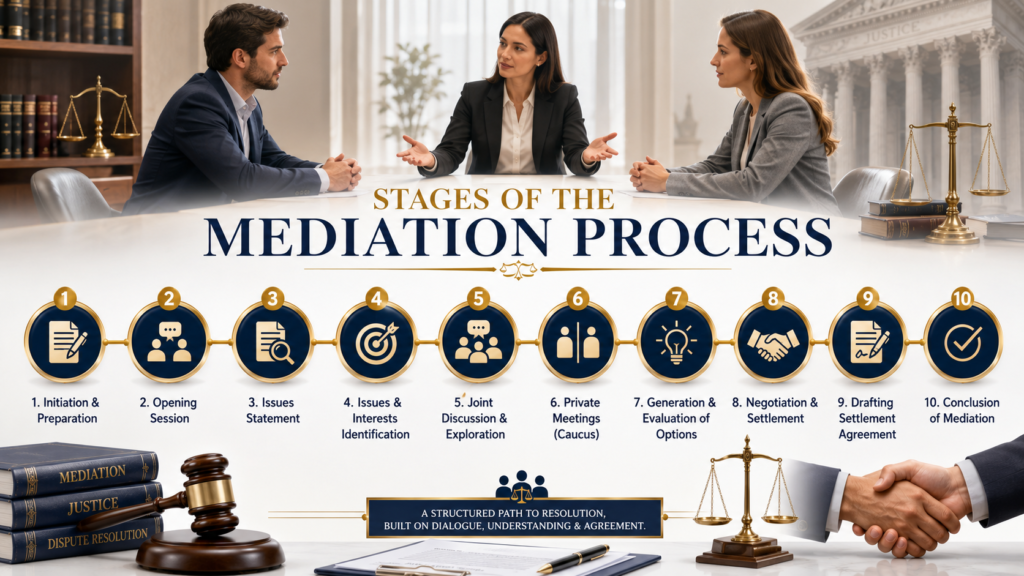
Stage 1: Initiation and Preparation
Mediation starts with the initiation of mediation. In this stage, participants commit themselves to mediate the dispute, choose a mediator and provide him or her with preliminary information on the nature of the dispute. Mediator clarifies what the process of mediation is, tells about the principles of voluntary, confidential, impartial, and respectful character of the dialogue.
Preparation is necessary to ensure creation of positive atmosphere for the discussion. Mediator can contact the parties separately to learn the history of the dispute and detect the problems which need to be solved prior to the mediation process.
This stage provides the base for future communication and cooperation of participants.
Stage 2: Opening Session
Opening session is the first official meeting of the mediator and the disputing parties. At this stage mediator introduces the procedure of the mediation process, sets ground rules and describes his or her functions.
Mediator stresses neutrality, confidentiality, and respect to the other party. Participants should attentively listen to each other and engage in the process sincerely. The purpose of the opening session is establishment of trust, reduction of tension and creation of friendly atmosphere.
This stage also provides an opportunity for parties to understand how mediation works and what they can expect from the process.
Stage 3: Issues Statement by the Parties
Following the initial meeting, the parties are given the chance to state their side of the dispute. They are allowed to express themselves, their views on the matter, their experience, and their expectations without any interruptions.
It is the stage at which the parties are allowed to voice out how they feel about the dispute and how it affects them. In addition, it is the stage through which the mediator gets to know the main issues and needs of each of the disputing parties.
The mediator listens attentively to what the disputants say, clarifies some facts and makes sure that both disputing parties have an equal chance to speak out.
Stage 4: Issues and Interests Identification
Having stated their positions, the mediator identifies the main issues surrounding the dispute. The mediator then moves from positions to the interests of the disputants.
A lot of disputes occur not only due to legal issues but rather due to unmet interests and communication gaps between the parties. Thus, the mediator assists the disputing parties to identify the true cause of the dispute.
Stage 5: Joint Discussion and Exploration
At this stage, the parties will have constructive discussion under the mediation of the mediator. They will discuss various aspects related to the dispute including their options for a solution, issues of common agreement, and areas of disagreement.
The role of the mediator is to facilitate the discussion, ask questions, summarize the discussion, and promote cooperation. The idea here is to take the parties away from confrontation and bring them to collaboration.
Stage 6: Private Meetings (Caucus)
In certain situations, the mediator may conduct private meetings with the parties individually. Such meetings are referred to as a caucus.
At this stage, the parties will be able to discuss sensitive issues in private with the help of the mediator. Issues like personal concerns, emotions, or options of settlement which they may not feel comfortable to discuss in front of the other party can be discussed in this way.
Information revealed at this stage is confidential and remains so unless it is revealed by the party.
Stage 7: Generation and Evaluation of Options
Having identified the issues and interests, the parties move onto considering the available options that could help settle the dispute. At this stage, the parties consider various options for a settlement and examine their pros and cons.
It should be noted that the mediator supports creative approach and cooperation at this stage. The parties do not dwell upon previous conflicts but focus on seeking practical solutions to problems.
It is important to find the options that will be able to satisfy the interests of the parties and result in the mutually beneficial solution.
Stage 8: Negotiation and Settlement
Having considered the available options for a solution, the parties start negotiating a settlement. At this stage, through negotiation, the parties try to settle the conflict.
The mediator helps in facilitating the communication process and evaluating the practical value of the proposed solutions. Nevertheless, no settlement is imposed on the parties by the mediator.
The settlement is reached voluntarily by all the parties concerned.
Stage 9: Drafting the Settlement Agreement
Once the parties agree on a resolution, the settlement terms are then put in writing. The settlement agreement contains a detailed account of the parties’ rights, responsibilities, and commitments.
The settlement agreement in writing ensures that there will be no future misunderstanding and serves as an accurate representation of the agreement reached in mediation.
The agreement is thoroughly reviewed by the parties prior to obtaining their signatures.
Stage 10: Conclusion of Mediation
The last stage of mediation involves the termination of the mediation process. Should a settlement have been reached, the settlement is formally recognized and the process is concluded by the mediator.
If no settlement is reached through mediation, the mediation process terminates without affecting the rights of the parties to explore other modes of dispute resolution like arbitration or litigation.
Approaches to Mediation
Mediation is a very flexible dispute resolution mechanism which can take various forms depending on the nature of the dispute, the requirements of the disputing parties, and the goals of the mediation process. Through time, various approaches to mediation have been created and each emphasizes certain elements of conflict resolution. Certain approaches focus on settling disputes and solving problems while others focus on enhancing relations between the parties, improving communications, and transforming personalities.
Depending on the nature of the dispute and requirements of the disputing parties, the mediator can take a specific approach to mediation.
Various approaches to mediation serve the purpose of helping the disputing parties resolve their conflicts through cooperation and mutual understanding and agreement.
Meaning of Approaches to Mediation
Approaches to mediation are the various styles or methods that mediators use to help the disputing parties solve their disputes. These approaches determine the way mediator works with the disputing parties, facilitates communication, helps to identify the issues of concern and to find solutions. Although all approaches have one goal, the peaceful resolution of disputes, they vary in their focus, techniques, and role of the mediator.
Facilitative Approach
Facilitative approach is one of the most frequently adopted approaches for mediation. In the case of a facilitative approach, the role of the mediator is that of a facilitator who helps the disputing parties in communicating and understanding each other’s interests. The mediator does not give any solutions nor expresses any opinions about the issue.
The key purpose of facilitative mediation is to facilitate the process where the parties identify their own interests, develop options, and reach an agreement. The mediator poses questions, encourages discussion and helps the parties clarify issues and explore solutions.
The approach stresses the autonomy and self-determination of the parties since the settlement is entirely reached by the disputants themselves.
Features of Facilitative Mediation
• Fosters effective communication.
• Mediator is impartial and does not give solutions.
• Facilitates development of the options by the parties.
• Makes the settlement voluntary and mutually acceptable.
• Self-determination of the parties is stressed.
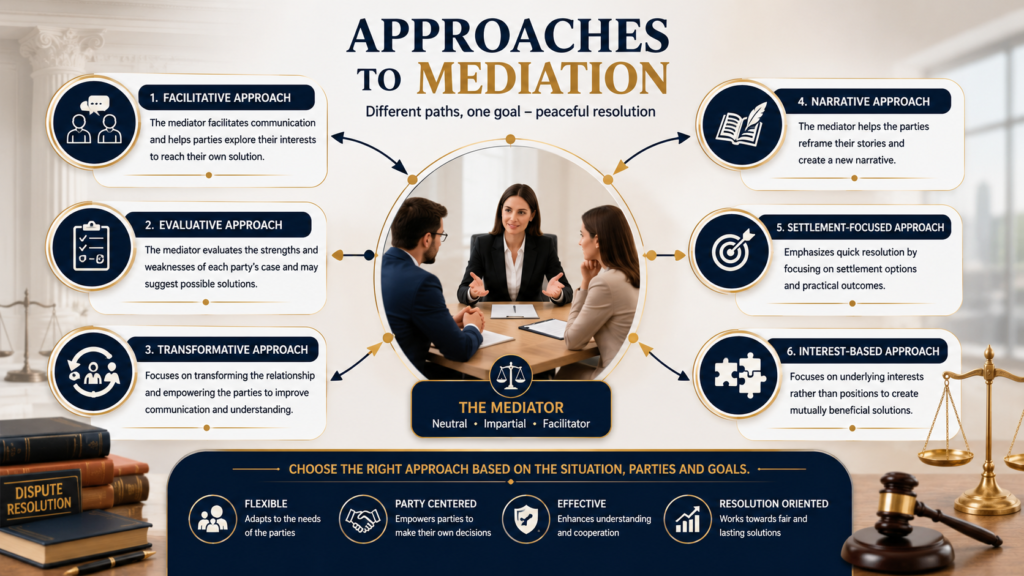
Approach to Evaluation
Under an evaluation approach, the mediator takes a more proactive stance in analyzing both strengths and weaknesses of the positions of the disputing parties. The mediator can give opinions, evaluate legal issues and also make suggestions regarding the probable results of taking the matter into court or arbitration.
The goal of evaluation mediation is to assist the parties in assessing their chances of winning and to settle their disputes from a realistic perspective. This kind of approach is typically applied in legal, business and other complex legal disputes.
Although the mediator can offer advice, the final decision is still in the hands of the disputing parties.
Characteristics of Evaluation Mediation
• Evaluation of legal and factual issues.
• Focused on the probable result of litigation.
• Helps to assess the claims in a realistic manner.
• Applicable in legal and business disputes.
• Settlement is voluntary.
Transformative Approach
Transformative approach is concerned with altering the nature of interaction among the disputants instead of concentrating only on bringing about a settlement. The main purpose of this approach is empowering the parties and building up a healthy relationship among them through communication and understanding.
Conflict, according to the transformative approach, provides an avenue for self development and constructive change where the mediator assists the disputants in gaining confidence, understanding each other’s point of view and respecting each other.
Settlement is viewed favorably but not as the ultimate objective.
Features of Transformative Mediation
Focuses on empowerment and recognition.
- Improves communication and relationships.
- Encourages personal growth and understanding.
- Settlement is secondary to transformation.
- Promotes long-term conflict resolution.
Narrative Approach
Narrative approach rests on the premise that people make sense of disputes through stories and experiences. Parties have formed perceptions about the nature of the dispute and they affect their actions.
Mediator works to help parties review their stories, address misconceptions, and form alternative views about the dispute. Through discussion and reflection, parties are able to change their perception about the dispute.
Narrative approach emphasizes changing perceptions and finding common ground regarding the dispute.
Characteristics of Narrative Mediation
• Highlights personal experiences of parties.
• Assists parties in reframing perceptions.
• Convinces parties about alternative perspectives of the dispute.
Approach Focused on Settling the Dispute
The approach focused on settling the dispute places major emphasis on the achievement of agreement between the disputing parties. It entails active participation of the mediator in the process of helping the parties to negotiate and narrow down the difference.
The approach is pragmatic and result oriented. It is based on mediation of compromise and the identification of the solutions for the parties to be able to settle their dispute.
The success of the approach is judged in terms of the achievement of settlement.
Characteristics of Interest-Based Mediation Approach
• It is primarily interested in achieving the settlement.
• It is oriented to promoting negotiations and compromise among the parties.
• It is practical and result oriented.
• It assists the parties to narrow down differences.
• Its main emphasis is on resolution of the dispute.
Interest-Based Approach
Interest-based approach concentrates on the interests, needs and concerns of the parties rather than their positions. The mediator tries to understand what the parties really want and why there is the dispute.
Features of Interest-Based Mediation
Focuses on interests rather than positions.
- Identifies underlying causes of conflict.
- Encourages creative problem-solving.
- Promotes cooperation and mutual gain.
Communication and Importance of Communication
Communication is one of the most important aspects of mediation and conflict resolution. It is the means through which people exchange information, ideas, thoughts, feelings, and opinions. Communication forms the basis of understanding, cooperation, and problem solving in mediation. Most conflicts escalate as a result of misunderstanding, lack of communication, and inefficient communication. Hence, effective communication plays a major part in assisting the parties to understand each other, establish the actual issue under dispute, and come up with an amicable solution.
Effective communication in the mediation process entails listening, understanding emotions, observing behavior, and interpreting non-verbal communication. The process assists the parties in overcoming misunderstanding and establishing trust and cooperation.
Meaning of Communication
Communication entails the exchange of information, ideas, emotions, and messages from one individual to the other. Communication requires speaking and listening. The effectiveness of communication ensures that the intended message gets understood by the receiving party.
In mediation, communication assists the disputing parties in communicating their needs, explaining their interests, and comprehending the viewpoint of the other party.
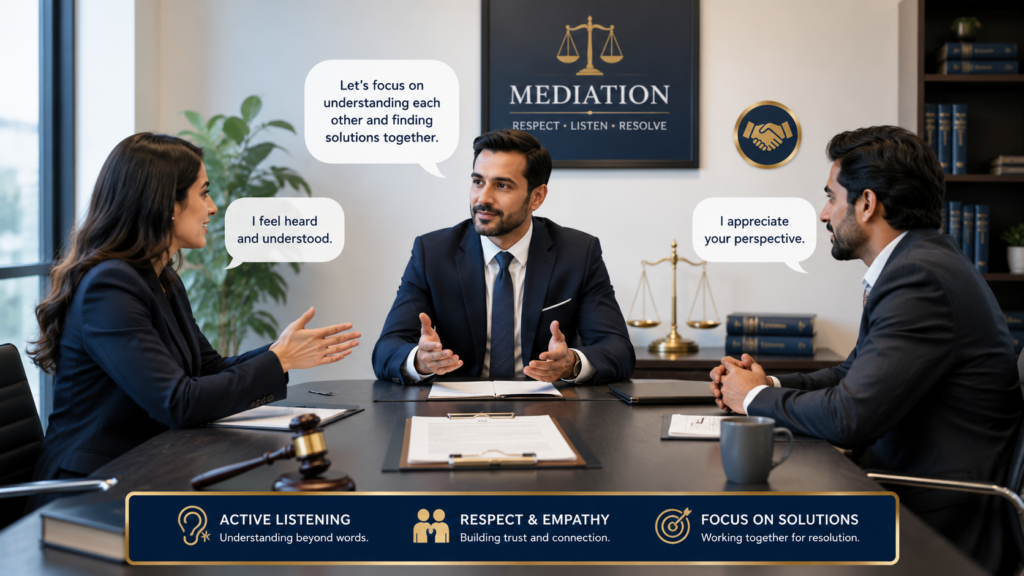
Role of Communication in Mediation
Communication plays a pivotal role in the mediation process. The mediator employs various communication skills to engage parties in meaningful discussions.
By communicating, parties get a chance to express their complaints, solve their misunderstandings, and find a way out of the situation.
Mediator makes sure that communication is effective and constructive. By providing a platform where parties feel comfortable, communication helps to avoid hostile atmosphere.
Effective communication makes it possible to transform the conflict into an opportunity for problem solving and understanding.
Importance of Communication in Mediation
Helps to Identify the Actual Issues
One of the most crucial roles of communication is the identification of actual issues at stake in a dispute. Very often, apparent conflict hides real issues that lie beneath it. In the course of discussion, parties are able to reveal these issues and work on resolving them.
Through communication, the mediator is able to understand the position of both parties and find out what needs to be addressed.
Reduces Misunderstandings
Sometimes, misunderstandings, wrong assumptions or lack of information become the cause of conflict. Communication becomes an effective tool of clarifying issues and resolving misunderstanding.
Bridges the Gap of Trust and Confidence
Trust is a crucial element in mediation. Effective communication builds confidence in both the parties and the mediator. It is easier for individuals to take part in the process when they feel that they are being understood.
Transparent and open communication results in an environment where parties are free to discuss delicate subjects.
Facilitates Expression of Feelings and Concerns
During mediation, individuals have an opportunity to express their feelings and frustrations in a constructive way. This is made possible through effective communication, during which individuals are able to explain the effect that the dispute has had on them.
The expression of feelings reduces the emotional stress and facilitates mutual understanding between the parties.
Fosters Mutual Understanding
Mutual understanding is one of the key goals of communication in mediation. The process involves listening to the perspective of the other party, and learning about the interests and concerns of other parties.
It makes people more cooperative and reduces hostility.
Facilitates Solution-Finding
Communication is important in creating and analyzing potential solutions. The parties will be able to come up with options that are helpful to solve their problems and satisfy their interests through discussions.
Good communication leads to cooperation in finding solutions that meet the interests of both parties.
Prevents Escalation of Dispute
Ineffective communication may lead to escalation of disputes. Good communication enables management of disputes before they escalate into major disputes. Mediation provides an opportunity for discussion and hence prevents disputes from escalating further.
Good communication facilitates good relations between disputing parties and hence prevents aggressive reactions.
Helps in Agreement
The ultimate aim of mediation is to arrive at a solution that is acceptable by all. Communication is very vital in negotiations for agreement.
Without effective communication, it will be hard for disputing parties to reach agreement.
Communication Types Used in Mediation
Verbal Communication
Verbal communication entails using speech in the transmission of ideas. Verbal communication is used by parties during mediation as a way of explaining their problems, communicating their point of view, and discussing ways of solving the dispute.
Verbal communication helps to foster mutual understanding and cooperation.
Non-Verbal Communication
Non-verbal communication entails messages conveyed via facial expressions, gestures, body postures, eye contact, and tone of voice. Non-verbal communication communicates many messages which are not communicated verbally.
The mediator will be very careful to listen to the non-verbal communication in order to get more information on the reactions and emotions of the disputing parties.
Written Communication
Written communication is the exchange of information through such things as letters, emails, agreements, and reports among others. Written communication is helpful in clarifying the issues of concern.
Effective Communication Skills in Mediation
Active Listening
Active listening implies giving full attention to the speaker and showing one’s understanding through proper responses. It makes people feel valued and understood.
Empathy
Empathy means being able to understand and value the other person’s feelings and experience. It fosters trust and better communication between the parties.
Clarification
Clarification means asking more questions for obtaining additional information to make sure the issues and concerns are clearly understood.
Reframing
Reframing is a specific technique of communication used by mediators when presenting negative or aggressive statements from another perspective.
Summarization
Summarization means making notes of the main points mentioned in the process of mediation.
Obstacles to Effective Communication
Some elements can hinder the process of effective communication during mediation. They include emotional stress, anger, prejudice, distrust, bad listening skills, culture gaps, language differences, and misunderstanding. Such obstacles can make communication difficult and complicate the process of conflict resolution.
The job of the mediator is to detect such obstacles and enable the parties to surmount them through good communication practices.